Martha McDonald "River Ode: The Schuylkill Freed" at Fairmount Water Works
“Martha McDonald ‘River Ode: The Schuylkill Freed’ at Fairmount Water Works”
by Richard M Torchia | The Philly Occasional
Jul 16, 2026
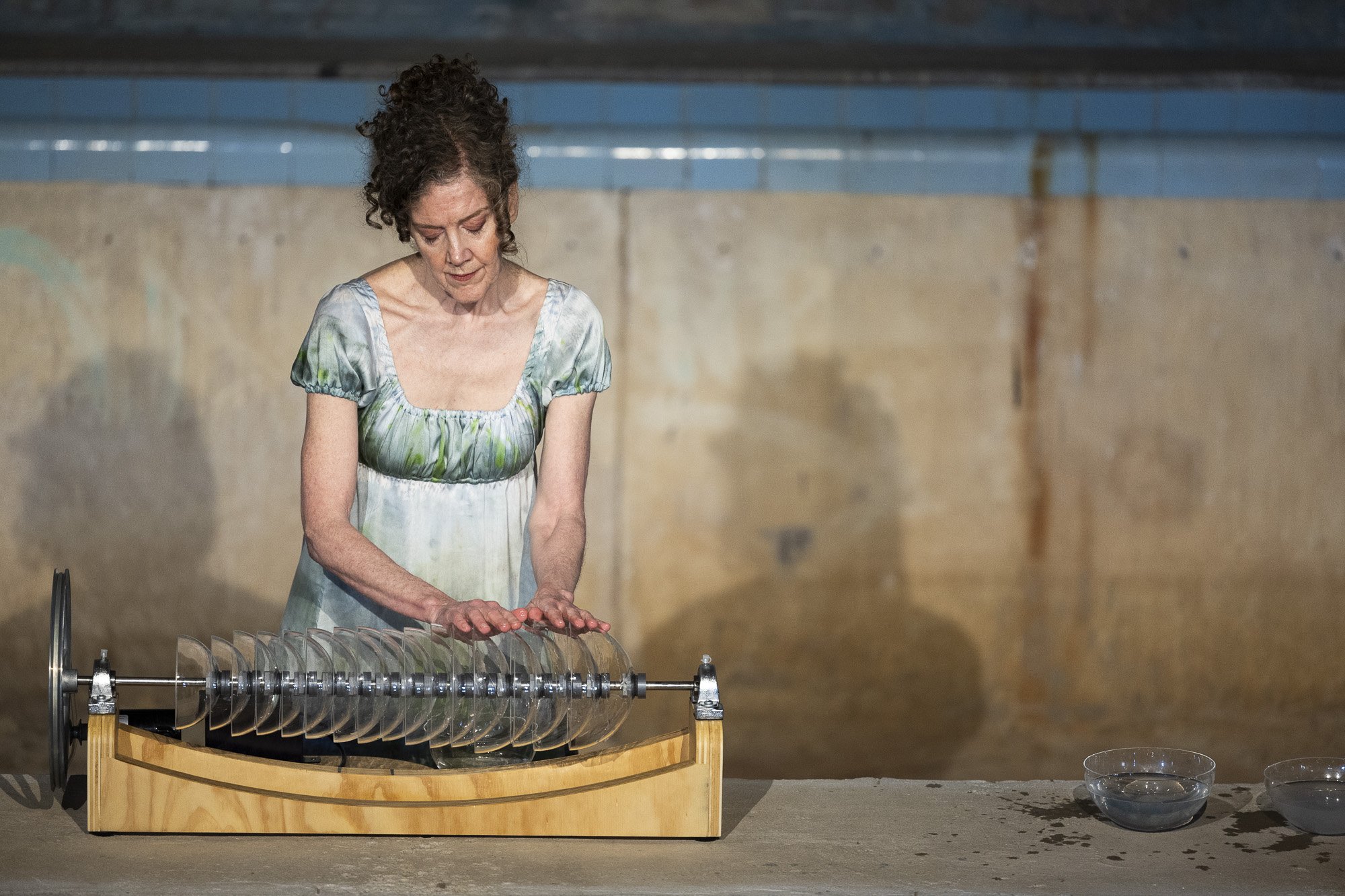
Martha McDonald’s performance, River Ode: The Schuylkill Freed, was a haunting, imaginative, and courageous meditation on the Schuylkill River and the history of Philadelphia’s Fairmount Water Works. Exemplifying this artist’s longstanding interdisciplinary approach to combining song, storytelling, movement, and the production of objects and costumes, McDonald’s captivating tour de force also served to advance her research-based practice in numerous ways. Programmed for two afternoon performances, this 35-minute work featured a suite of five original songs, the music and lyrics of which were written by McDonald, the first time she has worked without a collaborating composer. She performed these songs, with and without accompaniment, at carefully selected locations in the resonant cavern of the Waterworks’ Kelly Natatorium—formerly the site of an aquarium and swimming pool, now dry. As such, River Ode both complemented and expanded the deceptively restrained installation McDonald produced for “Currents,” an exhibition featuring ten local artists invited by Philadelphia Sculptors to realize sited interventions exploring the evolution and ecology of the river and Water Works as part of the semiquincentennial (https://philasculptors.org/currents). (On view through August 8, the exhibition remains an excellent incentive to visit the site, now a museum and educational center.)
The complex history of the Schuylkill River and the Water Works, which opened in 1815 as the nation’s first municipal water supply to use paddle wheels to move water, have been well tapped by all the artists in this ambitious group show. McDonald’s contribution, however, is distinguished by the depth and nuance of its response to the unique conditions of this civic ruin, in particular its reverberant acoustics and reception of daylight reflected off the river through the building’s arched, west-facing windows onto its walls, ceiling and floor. Adding to this was McDonald’s aspiration to sing with a musical instrument that would be played with water, a desire that led her to commission the production of a glass armonica when sourcing an example of one became prohibitive.